
Card Shuffler and Dealer Machines: Do You Need Both?
Probably not, and here is the arithmetic behind that answer. Shuffling recurs between every single hand. It is the one chore a machine genuinely removes, and a Lotus pass takes about 5 seconds. Dealing takes a few seconds per hand and rotates around the table as part of the game itself. The strongest evidence comes from the rooms with the most money at stake: the World Series of Poker builds a shuffling machine into the table, a five-figure unit leased to card rooms, and still has a human deal every card. Combo shuffler-dealer machines do exist. This guide covers what they are, what tends to break, and states our own position plainly: the Lotus shuffles; it does not deal.
What a shuffler and dealer machine is
Two very different products share the name, and the gap between them is most of the confusion.
Marketplace combo units. These are the 2-in-1 machines sold on online marketplaces: a shuffling stage on top of a rotating base that dispenses a set count of cards toward each seat, usually with a remote button per player and a built-in rechargeable cell. They sell in the same low price band as generic shufflers and, like generic shufflers, many are near-identical hardware under different brand names.
Casino-grade equipment. At the other end sits machinery like the Deckmate 2, the shuffler used in casino poker rooms and billed by its distributor as the official shuffler of the World Series of Poker. They are leased to licensed rooms and sell for five figures when they sell at all. Note what that machine does: it shuffles, inside the table, while the current hand plays. It does not deal. Dedicated dealing machines exist (duplicate bridge clubs use them to produce pre-set boards), but they are commercial equipment at commercial prices, not game-night gear.
Where a combo adds risk
A combo unit is a shuffler plus a second machine bolted on: a rotation motor, a dispensing feed, and counting logic that decides when to stop firing cards at a seat. Every added mechanism is an added jam point, and the dealing feed is the most failure-prone part: it has to grab exactly one card at a time, at speed, at an angle, from a stack that shrinks as it goes. A miscount is the worst of these, because a hand dealt one card short stops the game in a way a human dealer never does. People self-correct mid-deal without thinking about it.
There is also a table-geometry cost. A dealing machine must sit in the center of the table with clearance to rotate and a sightline to every seat. A shuffler sits wherever the dealer sits, or on a side table, and the deck comes back table-ready.
What slows your game down
Time the chores at your own table and the answer is lopsided. Shuffling happens between every hand, and doing it properly by hand means about seven riffles per the Bayer–Diaconis threshold, which is why almost nobody does it, and most decks limp along on two or three sloppy passes. That is the bottleneck, and the fairness leak, that a machine fixes: at about 5 seconds a pass, three passes fit inside the time it takes to gather cards and count chips.
Dealing is different. It takes seconds, it rotates, and it carries more ritual than any other motion in a card game: the deal marks whose turn it is to host the hand, and the cut exists so everyone sees fairness happen. We wrote about that history in the etiquette of the deal. Automating the shuffle removes a chore. Automating the deal removes a part of the game. Plenty of tables, once they see the split, decide the second machine solves a problem they do not have.
Where the Lotus stands
The Lotus shuffles; it does not deal. If automatic dealing is the feature you need, for limited mobility at the table or a house rule, that is a different machine. The Lotus is built to be the best version of the machine most tables need.
| Spec | Lotus V2 |
|---|---|
| Does it shuffle? | Yes: a real riffle; ~3 passes for casual play, ~7 for a near-random 52-card deck (Bayer–Diaconis) |
| Does it deal? | No |
| Pass time | About 5 seconds |
| Capacity | Two poker-size decks loaded together: 104 cards; 108-card canasta and 112-card UNO decks fit |
| Noise | Quiet enough to talk over |
| Power | Removable standard 9V (included), 500+ shuffles; no charging cable, no sealed cell to age out |
| Activation | Single touch sensor; a sensor inside reads one deck or two, nothing to select. No buttons, no app |
| Price / guarantee | $89 with free US shipping; 30-day full refund, 1-year warranty |
| Independent test | TheTabletopFamily bench: V2 24/25, Best Overall of the 8 distinct models they bench-tested from 13 shufflers |
And if you do decide a combo is right for your table, judge it on four things before you buy: deck capacity (will it take two full decks), card-size range (poker, bridge, and UNO sizes differ, check yours by name), the battery (a sealed rechargeable cell ages whether you play or not; a replaceable battery outlives it), and the return policy (marketplace generics vary wildly here, and the dealing feed is the part you are most likely to return over). Our best card shufflers guide covers the shuffling half of that checklist in depth.
FAQ
Is there a machine that shuffles and deals cards?
Yes. Marketplace 2-in-1 units shuffle a deck and then dispense a set count of cards to each seat from a rotating base, usually under $100. They work when they work, but the dealing feed is the most failure-prone mechanism in the category: jams, double-feeds, and miscounts are the recurring complaints. Casino-grade machinery splits the jobs: rooms use a dedicated shuffler like a five-figure in-table shuffler while a human deals.
Does the Lotus card shuffler deal cards?
No. The Lotus shuffles (two poker-size decks, about 5 seconds a pass, quiet enough to talk over) and it does not deal. If auto-dealing is the feature you need, that is a different machine. We build it for the job that recurs between every hand: a true riffle on every touch, three touches for game night.
Are shuffler-dealer combos any good?
Judge one on its dealing feed. The combo adds a rotation motor, a dispensing feed, and count logic on top of the shuffler, and each addition is a new jam point; marketplace reviews consistently report the dealing half failing before the shuffling half. If you buy one, check deck capacity, card-size range, whether the battery is replaceable, and the return policy, and assume the dealing feed is the part you are testing during the return window.
What do casinos use: a shuffler, a dealer machine, or both?
A shuffling machine plus a human dealer. Poker rooms build a Deckmate 2 into the table; it shuffles the next deck while the current hand plays, and it is leased to licensed rooms and costs five figures. The dealing is done by hand, by a professional. The industry with the most money riding on speed and fairness automated the shuffle and kept the human deal. That split is the answer to this whole category.
How much time does an automatic shuffler save?
It converts the between-hands pause into zero added time. A Lotus pass runs about 5 seconds, so roughly three passes finish in the time it takes to gather cards and count chips. The next deck is table-ready the moment the hand ends. The standard of about seven riffle passes, which almost no one sustains by hand all night, becomes about half a minute of machine time, a restack between each pass.
Do I need a dealing machine for poker night?
Almost certainly not. Dealing a poker hand takes seconds, rotates with the button, and self-corrects when a card goes astray. The recurring cost at a home table is the shuffle, which is why that is the half worth automating. Put the money toward the machine that runs between every hand, and keep the deal. It is one of the better rituals the game has.
Running a regular poker night? The poker card shuffler guide covers the single-deck case: speed between hands, noise at the table, and what a home game needs from a machine.
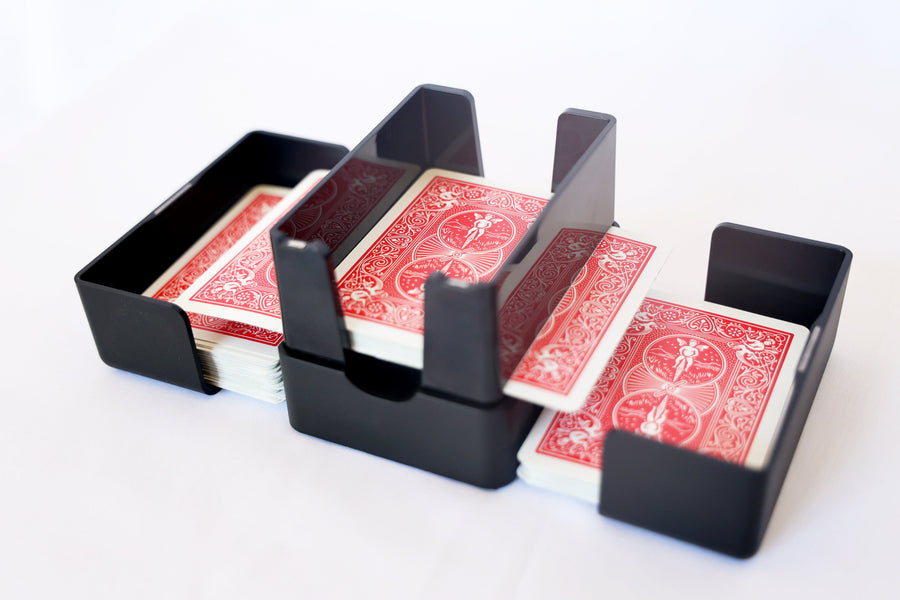
Product photo shows the original Lotus V1.
The one these guides keep pointing to
Lotus Card Shuffler V2
The Tabletop Family rated the Lotus V2 24/25, their Best Overall among the 8 distinct models they bench-tested from 13 shufflers. Lotus supplied its review units.
$89.00 Free US shipping
Order Now